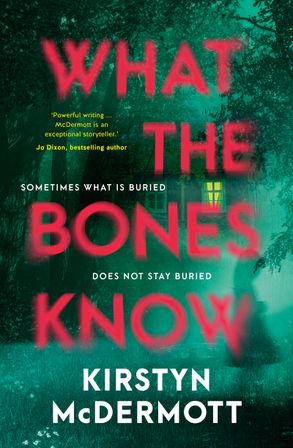
I had a chat with writer Kirstyn McDermott about writing, influences, being drawn to all things dark and mysterious, and about her latest book What the Bones Know.
A few questions… with Kirstyn McDermott
1. What (or who) have been the influences over the years as you developed your voice as a writer?
I first started writing with a view to being published in my late teens. I’m sure a reader would have seen Stephen King in my work as he was definitely a major influence and one of my favourite authors at the time. Later, the stylistic influences of Kathe Koja and Caitlin R Kiernan were very much present in a lot of my early work, including my first novel – Madigan Mine. Developing my own distinctive, recognisable voice used to be a major preoccupation. These days I’m more focused on finding the necessary voice for a particular story and/or character, which might not be anything like how I’ve previously written.
A definitive turning point for me was writing my Never Afters novellas, which are all told in first person from the perspective of a fairytale girl, now grown up and living her own story. Because I intended the novellas to be collected and work together as a whole, I was keenly aware that the voices all needed to sound different – but not in a gimmicky way – so the reader didn’t feel like they were reading a bunch of stories told by the same narrator. I put a lot of work into developing those seven unique voices, and now it’s something I do as a matter of course. I need to find the voice for the story before I can truly begin.
2. Do you know where your attraction to all things dark and mysterious might have originated from?
I’ve thought about this a lot of the years, not least because I get asked a variation of this question with such regularity. I suppose it’s something that all writers of dark fiction get asked, and it is a good question. I just wish I had a better answer! But honestly, I don’t really know. I’ve been drawn to the darker things in this world for as long as I can remember, even as I’ve also been frightened, disturbed or traumatised by them. Perhaps that’s where the fascination comes from. If I can understand or at least comes to terms with the thing that scare me, or makes me anxious, then it no longer holds that power over me. I’m also deeply contrarian and always have been, so if you tell me not to look at something – or not to write about something – then of course that’s the only thing I want to do! So, it’s probably a combination of both of those impulses: the need to understand the stuff that scares us, to drag it into the light for closer observation; and the need to speak about it, to show others what I have found.
3. Has there been anything unexpected about the writing, editing and promotion process for What the Bones Know?
To be honest, selling the novel to HQ/HarperCollins – as part of a two-book deal, no less – was in itself entirely unexpected. I wrote What the Bones Know mostly for myself and mostly in secret. Not even my agent knew I was working on a novel until it landed in her inbox in late 2023. I fully expected her not to be able to sell it to a major publisher and hand it back to me to make the rounds of the small presses, my beloved stomping ground for the past decade where I was fairly confident of finding it a good home.
I knew it was a good novel, I just didn’t think it was a commercial novel but I’m very glad to have been proven wrong about that. I was also a little concerned about what the editing process would be like considering there are elements of the novel, particularly its structure, which are outside the conventions of commercial fiction. Would they want to reshape it dramatically? How much would I need to push back on some things and what would I trade for what mattered most to me? But everyone at HQ has been so enthusiastic and supportive of the book for what it is, and the whole experience has been delightful. When you can exchange jokes with your editor that make you laugh out loud while working a spooky novel, you know you’re in good hands.
4. Are there any characters in your writing that you feel you’re most like?
I think most of my protagonists are warped, distilled or amplified versions of myself in some way – and maybe some of my antagonists are as well, although we won’t mention any names there. My supporting cast and walk-ons are where I can have more fun and often create characters from a meld of observation and imagination, but there’s a deeper intimacy required for the people I’ll be spending the bulk of the story alongside, a deeper empathy that’s needed for viewing the world through their perspective and experience.
That’s not to say all my protagonists are just like me, far from it. But few of them are entirely removed. It’s as though they are people I might have become had I been born into different circumstances or set upon another path and given a shove. There’s a necessary kinship, of sorts. In What the Bones Know, the younger Jude is very close to how I remember being at that age; the older Jude, not so much. Although, I might have easily been much more like her had I found myself trapped in an isolating, controlling relationship and mother to small child. I suspect I had a similar naivete and false bravado when I finished high school that she did, although fortunately it didn’t land me in a similar life situation!
5. What has drawn you time and again to fairytales (particularly retelling fairytales, or even going beyond fairytales)?
I was actually ambivalent about fairytales for the longest time. Absolutely adored them as a child, then snottily resented them as a teenager and into my twenties (I blame the Disneyfication), before finally making my way back to them through the lesser distributed tales from Grimm to begin with. There is so much in fairytales to mine critically and creatively, possibly because they’re often so deceptively simple (but not simplistic). There are layers there, they are just sometimes so fine it can take great effort to peel them away from each other and our hand-me-down readings of them. Fairytales are so embedded in Western culture they have become touchstones which also makes them ripe for pulling apart, retelling and otherwise using them as lens for our current concerns.
Two main elements in the genre continued to rankle and ultimately spurred me into a PhD: the general lack of female friendship and collaboration (not just an issue with fairytales, believe me), and the neatness of the happily-ever-after ending. What happened to all those fairytale girls after their story – the story we know, or think we know – ended? When they grew up? Perhaps had girls of their own? I wrote seven novellas around my PhD but had ideas for at least two or three more that I didn’t have time/space to work on. Maybe one day I’ll get to them.
6. And, finally, describe your ideal writing space!
You know, I think I might almost have my ideal writing space right now.
For too many years, I didn’t really have a proper place in our house to write. When we were in Melbourne, I had a home office with two desks in it – one for the business I ran at the time and one for writing. When I sat at the writing desk, it was game on. After we moved to Ballarat, I eventually gave away my writing desk and decided to do everything at the one workplace. Trouble was, that workplace didn’t feel that ‘comfortable’ for creativity. The stool that ensured I got up and moved around during my day, for example, wasn’t conducive to sitting and writing creatively. It was also the place where I worked from home during COVID-19. The associations were not great and the last thing I wanted to do when I didn’t have to sit at that desk was, well, sit at that desk.
Consequently, I wrote most of What the Bones Know (as well as the next contracted novel) sitting up in my bed with my laptop on a small portable table. The ergonomics… let’s not speak about the ergonomics. It also meant my furry little feline monsters would come and stretch out on my legs, which was sometimes adorable and sometimes a distraction.
But this year I was determined to set up a proper writing space in our back room. I acquired a comfortable chair, adjusted the height on my corner desk, and organised my workstation. The other side of the room houses a good portion of our library along with a gorgeous pair of upcycled chairs created by a local artisan, Alice Stewart, that I recently fell in love with. They’re so comfortable and I look forward to sitting in them to read and think writerly thoughts – if I can pry my colonising black cat out of them. The only other thing an ideal writing space would have for me would be a window overlooking a garden with plenty of native birds flitting about – although that also might prove too much of a distraction!
Kirstyn McDermott
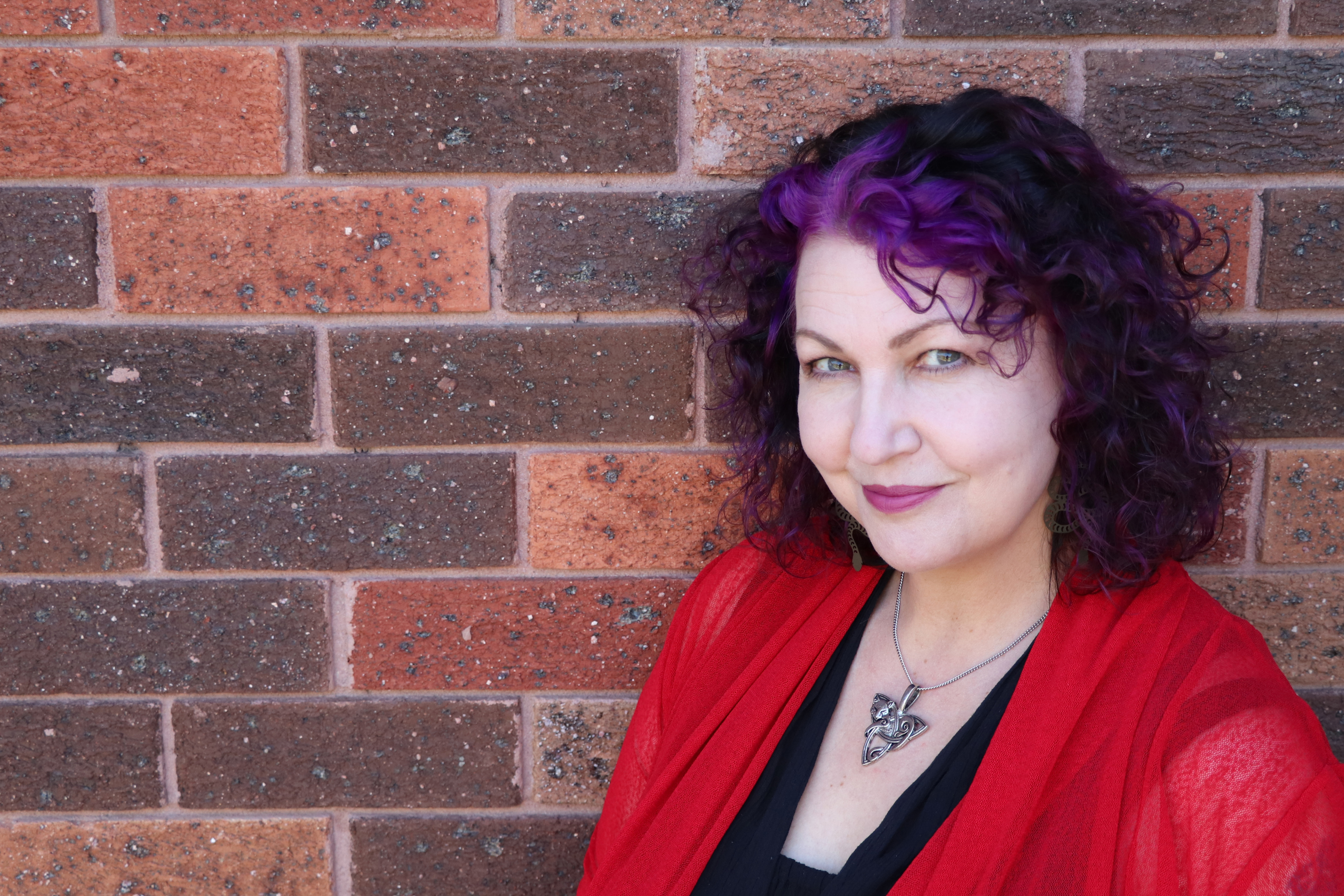
Kirstyn McDermott has been working in the darker alleyways of speculative fiction for much of her career. She is the award-winning author of the novels Madigan Mine, Perfections and What the Bones Know along with three collections, Caution: Contains Small Parts, Hard Places and Never Afters, numerous pieces of short fiction and the occasional poem. Kirstyn holds a PhD in creative writing with a focus on re-visioned fairytales and lives in Ballarat with fellow writer Jason Nahrung and two distinctly non-literary felines.
Kirstyn McDermott’s latest book is What the Bones Know, details here. Her website can be found here.
 Scott Vandervalk